





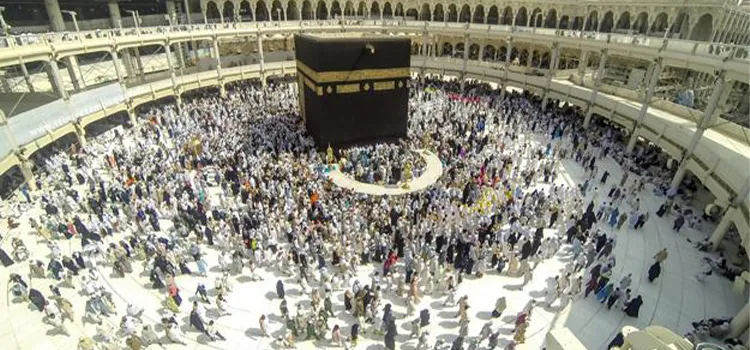
Tawaf is one of the most essential and well-known acts of worship in Islam. It is when a Muslim walks around the Holy Kaaba, thinking only of Allah. For anyone doing Umrah or Hajj, Tawaf cannot be skipped. Tawaf is a central part of these pilgrimages. It has deep spiritual meaning, history, and emotional value.
What Is Tawaf in Islam?
Tawaf is considered one of Islam's most significant acts of worship. It is very meaningful and is done only in the holiest place in Islam. Tawaf is a central part of both Umrah and Hajj. Every pilgrim should know clearly what Tawaf means. It is crucial to understand why it is done.
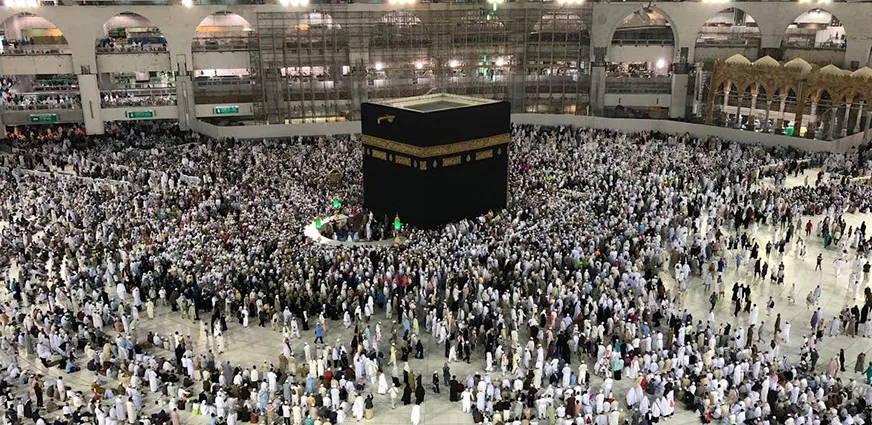
In Islam, Tawaf means walking around the Holy Kaaba seven times. It is the most sacred place in Islam. Pilgrims walk in an anti-clockwise direction. This means the Kaaba stays on the left side of the person walking. Seven rounds make a complete Tawaf.
Tawaf is not just regular walking. It is a special act of worship. A pilgrim must have a clear intention. Intention means knowing in the heart why you are doing something. Pilgrims must also be aware and show respect while doing Tawaf. Every step taken is a way to remember Allah.
Why Muslims Perform Tawaf Around the Kaaba
Moreover, Muslims perform Tawaf because Allah has commanded it. It is part of following Islamic teachings. Prophet Muhammad PBUH also did Tawaf. He followed the example of Prophet Ibrahim.
Walking around the Kaaba shows love and obedience to Allah. It also indicates submission. Tawaf teaches that Allah should be at the centre of a Muslim's life. Just like the pilgrim moves around the Kaaba, a Muslim should try to have their life revolve around obeying Allah.
How Tawaf Differs from Other Acts of Worship
Tawaf is different from other acts of worship in Islam. Other acts of worship can include prayer and fasting. Prayer is done while standing still. Fasting involves abstaining from food and drink for a period of time. Tawaf is different because it affects both the body and the heart simultaneously.
Another difference is that Tawaf can only be done in one place. It must be done around the Kaaba in Masjid al-Haram. No other place in the world can be used to perform Tawaf. This makes Tawaf very special. It also shows how important Makkah is in Islam.
Tawaf also creates a strong sense of community. Millions of Muslims from many countries, cultures, and languages participate together. Everyone moves in the same direction around a single centre. This shared experience teaches unity.
Meaning of Tawaf
To really understand Tawaf, we need to look beyond just the walking. Tawaf is not only about moving around the Kaaba. It has a deeper meaning in Islam. This deeper meaning is significant to Muslims.
Linguistic Meaning of Tawaf
The word Tawaf comes from the Arabic root Taafa. This means to go around something. It can also mean to move in circles or to go around continuously. In everyday Arabic, it can mean going around anything. In Islam, this meaning becomes more special. Tawaf is not just walking around without purpose. Every step has a reason and a meaning. It is done with a clear intention to worship Allah and show respect for the holy Kaaba.
Religious Meaning of Tawaf in Islam
Moreover, in Islam, Tawaf means walking around the Holy Kaaba seven times. This is done as an act of worship. It is done as taught by Prophet Muhammad PBUH. Tawaf is not only walking. It is also remembering Allah at every step. Every circle brings the worshipper closer to Allah. It is a way of showing love and obedience.
Symbolism of Circling the Kaaba
Walking around the Kaaba also has strong symbolism in Islam. The Kaaba is the spiritual centre of the Muslim world. By walking around it, Muslims show that Allah is the centre of their lives. Walking in a circle represents many things. It shows unity among Muslims, no matter where they come from. It also indicates equality. Everyone moves at the same level with no one above another. It shows humility. No one is higher or lower than anyone else. It shows complete submission to Allah's will. Every step is a reminder to follow Allah and live with respect and devotion.
Why Do Muslims Perform Tawaf Seven Times?
One of the most common questions pilgrims ask is why Tawaf is performed seven times, not more or less. The answer is not about numbers or human thinking. It is about following Allah, adhering to the teachings of the Prophet Muhammad PBUH, and understanding the spiritual meaning behind them.
Religious Reasoning Behind Seven Rounds
Firstly, the main reason Muslims perform Tawaf seven times is that this is what Prophet Muhammad PBUH taught and did. He walked around the Kaaba seven times. He told his followers to do the same. In Islam, acts of worship are guided by Allah and the Prophet. They are not based on personal ideas or human choices. So, this shows obedience to Allah and respect for the teachings of the Prophet.
Sunnah Background and Prophetic Practice
Tawaf as we do it today is based on the Sunnah of the Prophet PBUH. Sunnah means the practices and actions of the Prophet that Muslims follow. From his Farewell Hajj to his earlier pilgrimages, he always did seven rounds. He showed his followers the proper method. His companions also followed this way. It has continued the same way ever since.
Spiritual Significance of Seven Rounds
Moreover, each round of Tawaf has a deep spiritual meaning. As pilgrims walk around the Kaaba again and again, they move away from distractions. They get closer to being humble and focused. Doing it repeatedly helps people reflect. It teaches patience. It reminds them of Allah at every step.
Submission Over Explanation
Islam teaches that not every act of worship needs a scientific or symbolic reason. Tawaf is a potent reminder that faith comes from submission and trust. Submission means accepting Allah's commands without asking why. Muslims do seven rounds because Allah commanded it. They do it because His Messenger, PBUH, showed how to do it. It is about following faith and trust, not reasoning.
Where Does Tawaf Take Place?
Tawaf cannot be performed anywhere. It has a special place and a significant meaning in Islam. Tawaf is a type of ritual. A ritual is a religious act with special meaning. It is a way for Muslims to show their love and respect for Allah.
Masjid al-Haram in Makkah
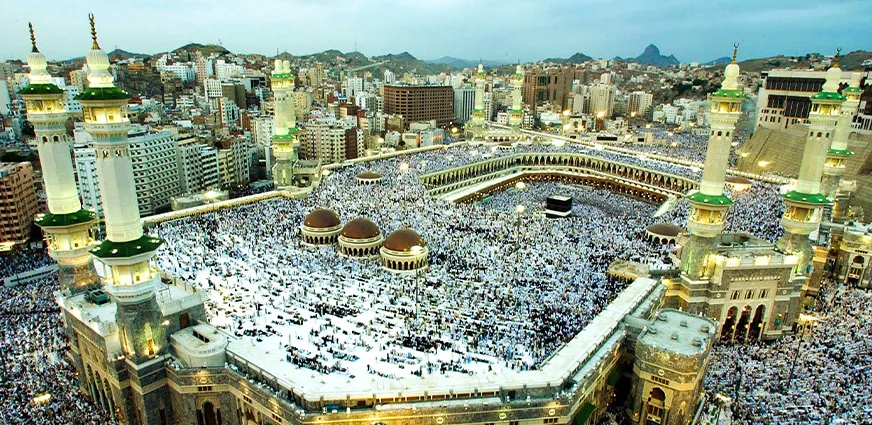
Firstly, in a broad sense, Tawaf happens inside Masjid al-Haram. Masjid al-Haram is the Grand Mosque in Makkah, Saudi Arabia. The mosque surrounds the Holy Kaaba. It is the primary focus of Tawaf.
Tawaf Around the Holy Kaaba
The Kaaba is in the middle of Masjid al-Haram. Muslims face the Kaaba when they pray every day. This is called Qibla. During Tawaf, pilgrims walk around the Kaaba seven times. They always keep the Kaaba on their left side. The open space around the Kaaba is called the Mataaf. Mataaf is the area where Muslims do Tawaf. It is the central place for this ritual.
The Starting Point: Hajar al-Aswad
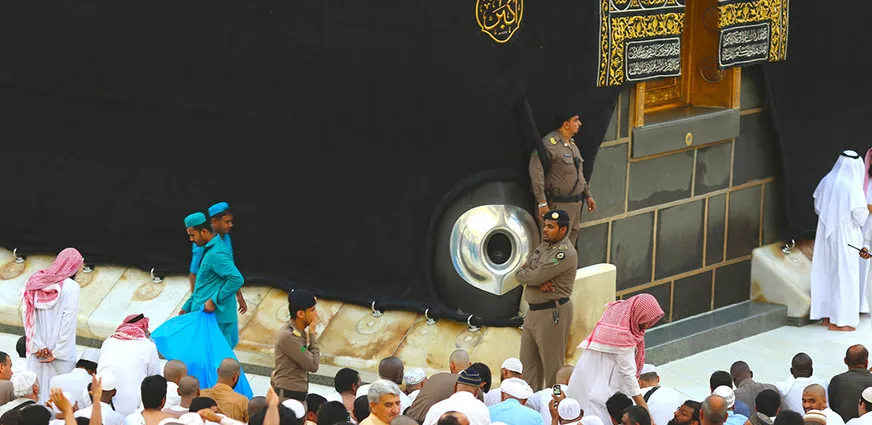
Lastly, every Tawaf starts and ends at Hajar al-Aswad. Hajar al-Aswad is also called the Black Stone. It is a dark stone set in one corner of the Kaaba. It is the official starting point for each circle around the Kaaba. Pilgrims line up at Hajar al-Aswad before they start Tawaf. If they can, they touch or kiss the stone. Otherwise, they face it, raise their hand, and start walking. Each circle is counted when the pilgrim comes back to the stone.
Conditions and Requirements for Tawaf
Before starting Tawaf, it is essential to know that this act of worship has specific rules in Islam. Knowing these rules before starting helps pilgrims do Tawaf with confidence and peace of mind.
State of Purity: Wudu
Firstly, being clean is one of the most essential rules of Tawaf. A person must have proper wudu before starting Tawaf. Wudu is the ritual washing Muslims do before prayers to be clean. A person must stay pure during all seven rounds of Tawaf. Tawaf is like prayer in this way because both need cleanliness and attention.
Besides wudu, a person must not have major impurity. Major impurity means a state that needs a full bath called ghusl. If a person has major impurity, they must perform ghusl before Tawaf. A clean body, clean clothes, and clean shoes are also significant because Masjid al-Haram is a very holy place.
Covering the Awrah
Covering the awrah is another rule for Tawaf. Awrah is the part of the body that you must cover according to Islamic laws. For men, the part of the body from the navel to the knees must always be covered. For women, the whole body must be covered. The face and hands can stay uncovered. Clothes should be modest, loose, and not see-through. Covering the awrah properly follows the same rules as prayer.
Intention: Niyyah
Moreover, every act of worship in Islam starts with intention. Tawaf is the same. Niyyah means having the intention in the heart. A person must have the intention in their heart before starting Tawaf. There is no need to say the intention out loud or use any special words. The heart must know the purpose of Tawaf.
Correct Direction: Anti-Clockwise Movement
Tawaf must be performed in an anti-clockwise direction. This means moving to the left around the Kaaba. The Kaaba must always face to the left. This is not just a symbol. It is a rule from the Sunnah of Prophet Muhammad PBUH. So, following this direction is essential for the act of Tawaf.
Completing Seven Full Circuits
A proper Tawaf has seven complete rounds around the Kaaba. Each round must start and end at Hajar al-Aswad. Half rounds or incomplete rounds do not count. So, if a pilgrim is not sure how many rounds they have done, they should go by the smaller number to avoid mistakes.
Walking and Use of Assistance
Lastly, walking is the usual way to do Tawaf. But Islam allows help for those who need it. Tawaf can be done on foot or in a wheelchair. Help can be used because of age, sickness, or disability. Using help does not make Tawaf less rewarding. Every pilgrim can complete Tawaf in the way they are able.
How to Perform Tawaf (Step-by-Step Guide)
There are different steps involved in performing Umrah, and among them, the most important step is Tawaf.Doing Tawaf correctly is essential. Knowing each step helps you focus. It enables you to avoid mistakes and perform Tawaf with calm and confidence.
Step 1: Making Intention (Niyyah)
Before you start Tawaf, you must make a sincere intention in your heart. This intention is for Allah only. You should know clearly which Tawaf you are doing. Niyyah means the intention in your heart to worship Allah. You do not need special words for niyyah, nor do you need to say it out loud. Just being aware in your heart that you are going to perform Tawaf as worship is enough.
Step 2: Starting from Hajar al-Aswad
Tawaf starts at Hajar al-Aswad. So, stand facing the stone. Also, make sure your chest is in line with the stone.
Step 3: Completing Seven Rounds Around the Kaaba
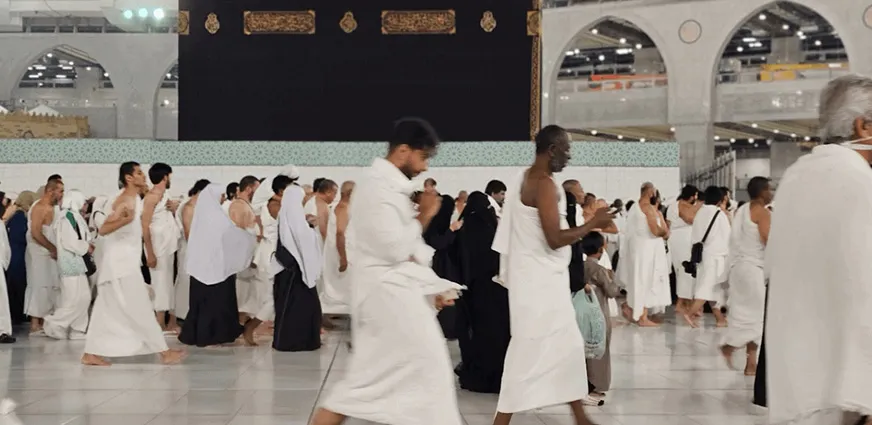
You must walk around the Kaaba seven full times. Keep the Kaaba on your left as you walk. Tawaf is done in an anti-clockwise direction. Each round starts and ends at Hajar al-Aswad.
Step 4: Ramal and Idtiba
This step is for men only. It is done only in certain Tawafs. For example, Tawaf al-Qudum or Tawaf for Umrah. Ramal means walking a little faster during the first three rounds. You walk briskly but with dignity. Idtiba means showing the right shoulder. You do this by putting the Ihram cloth under the right arm and over the left shoulder.
However, keep in mind that Ramal and Idtiba are Sunnah. Sunnah means it is a recommended action from the Prophet, but not required. They are not done in every Tawaf. Women do not do Ramal or Idtiba. Also, if it is crowded, or fast walking may hurt someone, Ramal can be left out. Leaving it out does not affect the Tawaf.
Step 5: Completing Tawaf
When you reach Hajar al-Aswad at the end of the seventh round, your Tawaf is finished. At this point, face Hajar al-Aswad, and say Allahu Akbar. Do not start an eighth round. Many people make this mistake. They keep walking or feel unsure about stopping. Once seven rounds are done, Tawaf ends right away. So, take a moment here to thank Allah.
Step 6: Two Rak'ahs After Tawaf
Lastly, after finishing Tawaf, it is Sunnah to pray two rak'ahs. This shows that your Tawaf is complete. It is best to pray behind Maqam Ibrahim. Maqam Ibrahim is the stone where Prophet Ibrahim stood while building the Kaaba. If it is crowded, you can pray anywhere in Masjid al-Haram.
What to Recite During Tawaf
Tawau shows love and devotion to Allah. While walking, pilgrims can keep worshiping. They can pray, remember Allah, and ask for what they need or wish for. This makes the act very personal and meaningful.
No Fixed Duas Are Required
Firstly, there is no single prayer that you must say during Tawaf. Islam teaches that being sincere is more important than following strict rules. So, you can say short phrases or long prayers. You can also stay silent and think about Allah.
Personal Supplication
Tawaf is a perfect time for personal requests. While walking around the Kaaba, you can make prayers for yourself. You can pray for your family. You can even pray for other people. This makes the experience very spiritual and touching. It helps deepen the connection with Allah while performing the ritual.
Dhikr and Quran Recitation
Moreover, remembering Allah and reciting the Qur'an is encouraged. This is called dhikr. Dhikr means remembering Allah by saying words that praise Him. You can say simple phrases like SubhanAllah. This means Glory be to Allah. You can say Alhamdulillah. This means all praise is due to Allah. You can also say Allahu Akbar. This means Allah is the Greatest. You can say these phrases quietly or aloud. If you are comfortable, you can also say short verses from the Qur'an. This adds more meaning to your Tawaf.
Stay Focused
Lastly, it is essential to stay focused. Even when the area is crowded, try to remain calm. Do not get distracted by taking photos, or push through the crowd. Most importantly, do not lose count of your rounds. Staying focused helps make your Tawaf more meaningful and peaceful.
Recommended Duas During Tawaf
Duas (prayers) are an important part of Tawaf. However, there are no required or fixed prayers for Tawaf. What is most important is honesty and connection with Allah. So, here are some recommended du 'as.
سُبْحَانَ اللَّهِ وَالْحَمْدُ لِلَّهِ وَلاَ إِلَهَ إِلاَّ اللَّهُ وَاللَّهُ أَكْبَرُ
SubhanAllahi walhamdulillahi wa la ilaha illAllahu wallahu Akbar
"Glory be to Allah. All praise is for Allah. There is no god but Allah. Allah is the Greatest."
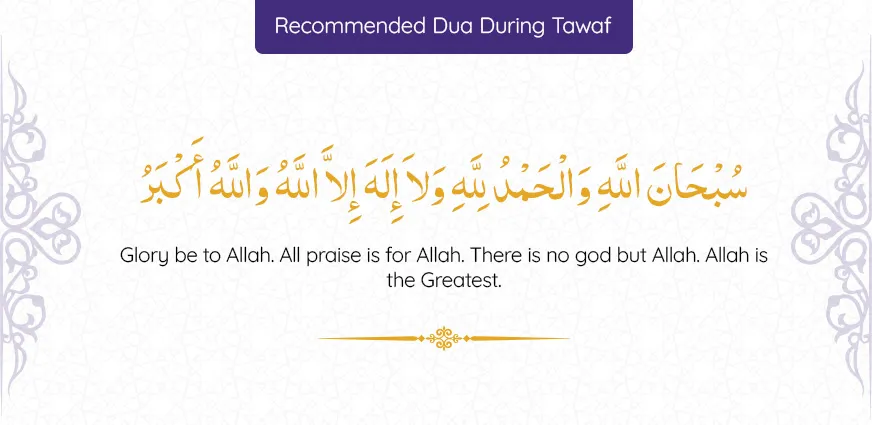
This dhikr praises Allah. It reminds us that Allah is great and that there is no god except Him. You can repeat it in every round of Tawaf.
لَا حَوْلَ وَلَا قُوَّةَ إِلَّا بِاللَّهِ
La hawla wa la quwwata illa billah
"There is no power or strength except with Allah."
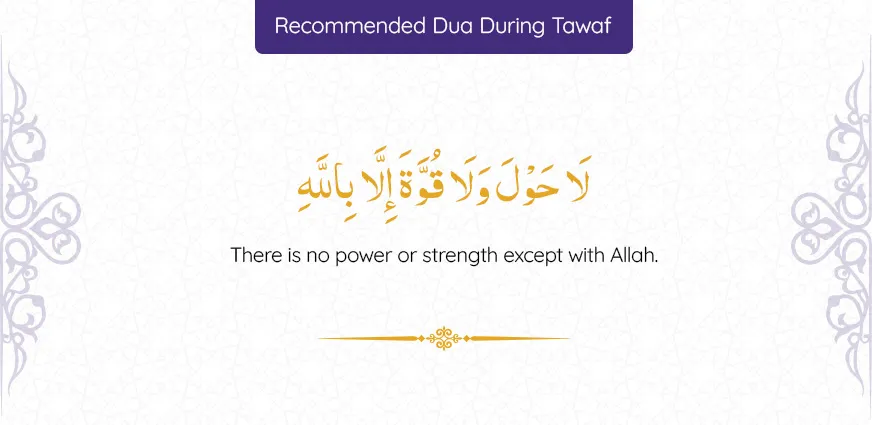
This phrase shows that we depend on Allah. It reminds us that all strength and power belong only to Allah.
أسْتَغْفِرُ اللهَ رَبي مِنْ كُلِ ذَنبٍ وَأتُوبُ إلَيهِ
Astaghfirullah Rabbi min kulli dhambin wa atubu ilayh
"I ask Allah my Lord to forgive all my sins. I turn to Him in repentance."
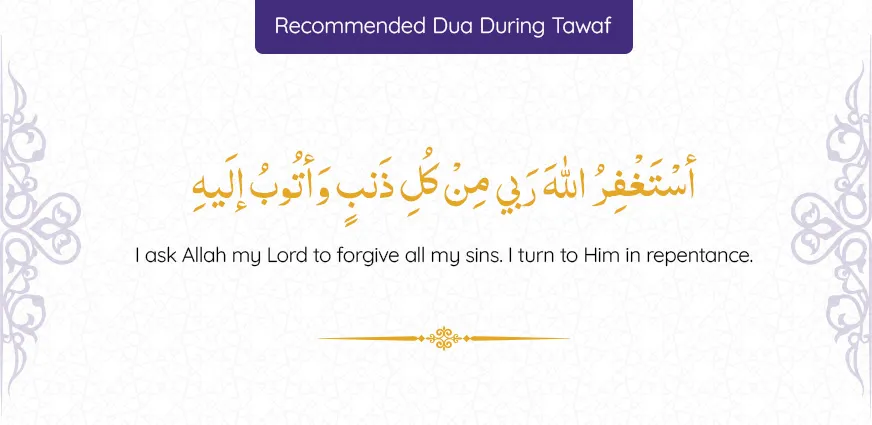
This dua asks Allah to forgive sins. It asks Him to guide the pilgrim to do good and to avoid wrongdoing.
Duas Between Rukn Yamani and Hajar al-Aswad
During Tawaf, there is a special place between the Rukn Yamani, which is the Yemeni Corner of the Kaaba, and the Hajar al-Aswad, which is the Black Stone. At this spot, pilgrims are encouraged to make supplications and pray from the heart.
The Famous Dua
One of the most famous and authentic duas said at this spot is:
رَبَّنَا آتِنَا فِي الدُّنْيَا حَسَنَةً وَفِي الْآخِرَةِ حَسَنَةً وَقِنَا عَذَابَ النَّارِ
Rabbana atina fid dunya hasanah wa fil akhirati hasanah wa qina azab an nar
"Our Lord give us good in this world and good in the Hereafter and save us from the punishment of the Fire."
This dua is very important because it has three main parts of a believer's life. First, it asks for goodness in this world. Second, it asks for goodness in the Hereafter. This means asking Allah to give reward and peace after death. Third, it asks for protection from Hellfire. This means asking Allah for forgiveness and safety from punishment in the Hereafter.
Importance and Authenticity
The Sunnah of Prophet Muhammad PBUH supports this dua. It is very good to say it sincerely during Tawaf. Pilgrims can say any personal supplication at this spot. However, this dua is recommended because it is short and easy to remember.
Types of Tawaf
Tawaf is not just one single act. There are different types of Tawaf. Each type has its own purpose and its own time to do it. So, let's take a look at the different types.
Tawaf al-Qudum
Firstly, Tawaf al-Qudum is also called the arrival Tawaf. Pilgrims do it when they first come to Makkah for Hajj. This Tawaf is a way to welcome the pilgrim to the holy city. It is highly recommended but not required. This Tawaf helps pilgrims spiritually prepare for the Hajj rituals.
Tawaf al-Ifadah
Tawaf al-Ifadah is one of the main pillars of Hajj. This means it is required for completing Hajj. Pilgrims do it on or after the tenth of Dhul Hijjah. The tenth day of Dhul Hijjah is the day of Eid al-Adha. Pilgrims do Tawaf al-Ifadah after standing at Arafat. This Tawaf shows spiritual renewal. It completes the main Hajj rituals.
Tawaf al-Wida
Tawaf al-Wida is also called the farewell Tawaf. Pilgrims do it before leaving Makkah. This Tawaf is Sunnah for Umrah pilgrims. For Hajj pilgrims, it is a must. This Tawaf is a way to say goodbye spiritually. It is also a way to thank Allah for letting them visit the House of Allah.
Tawaf for Umrah
Moreover, Tawaf is the central part of Umrah. Hajj has many types of Tawaf at different times. However, Umrah has only one required Tawaf. This Tawaf is done right after entering Ihram. Ihram is a sacred state that a pilgrim enters before starting Hajj or Umrah. Sa'i follows Tawaf for Umrah. Sa'i means walking seven times between two small hills called Safa and Marwah.This makes Tawaf the most important part of Umrah.
Nafl Tawaf
Lastly, besides the required and Sunnah Tawafs, there is also Nafl Tawaf. Nafl Tawaf is voluntary. Voluntary means you can choose to do it, but it is not required. Anyone can do it anytime. This includes pilgrims and residents of Makkah. Nafl Tawaf is done to get an extra reward. It is also done to become closer to Allah.
Best Time to Perform Tawaf
You can perform Tawaf at any time when the mosque is open. However, selecting the correct time can improve it.
Less Crowded Times
The Holy Mosque in Makkah is often full of people. But there are times when it is quieter and more peaceful. Late at night, after the Isha prayer, it is usually calm. So, pilgrims can walk around the Kaaba without rushing or bumping into others. The air is cooler at night. So, this is very helpful in hot months.
Early in the morning, before the Fajr prayer, it is also quiet. Many pilgrims rest after night prayers. This leaves the early hours calm. Doing Tawaf at this time can feel peaceful.
Practical Advice for Pilgrims
Check prayer times before starting Tawaf. Try not to start just before or after big prayers if you want to avoid crowds. Also, wear comfortable socks or shoes. Comfort is important if your Tawaf is long. Lastly, Zamzam water is very good before or after Tawaf. It helps keep your energy, especially during the hot daytime.
Significance and Spiritual Benefits of Tawaf
Tawaf is a significant spiritual action that helps Muslims feel close to Allah.
Connection with Allah
Firstly, the primary purpose of Tawaf is to build a close connection with Allah. Every step, every turn, and every gesture shows obedience, love, and devotion. While walking around the Kaaba, Muslims show that Allah is at the center of their life. This act reminds people to keep their focus on God rather than their daily worries.
Unity of the Ummah
Moreover, Tawaf shows how all Muslims are connected. People from different countries, races, social classes, and wealth walk around the Kaaba together. Everyone does the same ritual in the same way. This shows that in the eyes of Allah, all Muslims are equal.
Reflection
Doing Tawaf also helps a person think about themselves and their life. Walking around the Kaaba helps pilgrims remember their place in the world. Each circle around the Kaaba encourages Muslims to leave pride, ego, and attachment to worldly things.
Emotional Benefits
Lastly, Tawaf also has benefits for the mind and emotions. The regular movement and focus on Allah can make a person feel calm and peaceful even when there are many people around. Walking in circles while praying helps the mind stay quiet and focused.
Common Mistakes to Avoid During Tawaf
Tawaf is a very important spiritual act. It is a way to get closer to Allah. Many people do Tawaf but make small mistakes. So, knowing these mistakes before you start can help you do Tawaf correctly.
Thinking Fixed Duas Are Compulsory
Many people think they must say certain prayers or duas in every round of Tawaf. This is not true. You can say any prayer or even talk to Allah in your own words. What matters most is being sincere and focusing on Allah while doing Tawaf.
Pushing or Hurting Others
Masjid al-Haram is very crowded at times. This is especially true during Hajj and Umrah. Some people push or try to hurry to reach Hajar al-Aswad. Others try to finish Tawaf faster. This is not right. Pushing or hurting others is against Islamic manners. It also stops others from worshipping peacefully.
Losing Count of Rounds
Tawaf means going around the Kaaba seven times. Each round starts and ends at Hajar al-Aswad. In the crowd or if you are distracted, it is easy to lose count. Losing count may mean you have to start again or adjust. This can make you feel stressed.
Ignoring Direction Rules
Lastly, Tawaf must always be done in an anti-clockwise direction. The Kaaba must stay on your left as you walk. Walking the wrong way invalidates your Tawaf.
Final Thoughts
Tawaf is one of the most important rituals of Umrah, and performing it correctly is extremely important. If you are performing Umrah for the first time, it is best to learn about all the rituals properly. Otherwise, you should book Umrah packages from an agency that provides complete step-by-step guidance along with the package, such as Bismillah Travel.
Tawaf is not just walking around the Kaaba. It is a very special act and a spiritual experience. This act brings Muslims from all over the world together.
So, when you get ready for your pilgrimage, it is important to remember that Tawaf is a gift. It is a chance to leave behind your everyday worries and distractions. Tawaf lets you focus only on Allah. You stand in front of Allah with devotion. It is a time to feel close to Allah and to pray with your heart.