





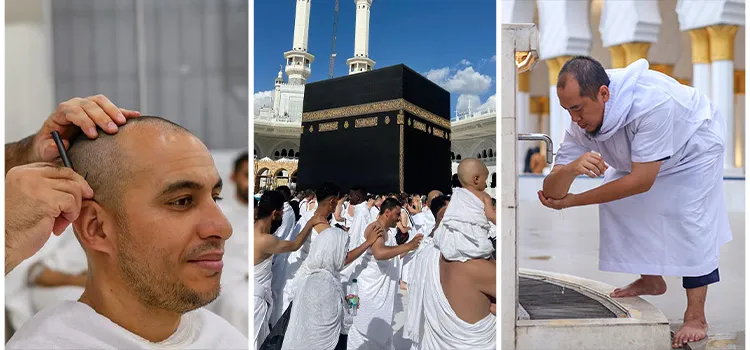
Umrah has been recognised as one of the holiest travels and is, in fact, a deed of immense reward. It helps Muslims thoroughly wash away their souls, become more mindful of Allah, and feel the religious magnificence of Madinah and Makkah. Though this particular journey has not been made mandatory for Muslims, it certainly holds immense significance in Islam. It could be performed at any time of the year. For Muslims who receive a chance to perform the journey of Umrah for the first time in their life, it is the need of the hour to understand the manner in which it has to be performed.
Umrah is a pious journey in which Muslims visit the sacred city of Makkah to worship Allah and seek His forgiveness. Although Umrah is not obligatory like Hajj, it holds great spiritual value in Islam. Allah says in the Qur'an:
وَأَتِمُّوا الْحَجَّ وَالْعُمْرَةَ لِلَّهِ
"And complete the Hajj and Umrah for Allah." (Surah Al-Baqarah 2:196)
This verse highlights that Umrah, when performed, is an act of sincere devotion to Allah. Unlike Hajj, Umrah can be performed at any time of the year, making it accessible to Muslims of all ages and circumstances. The rituals of Umrah are simpler and require less time, which often leads people to ask how long it takes to perform Umrah. In most cases, the main rites can be completed within a few hours. However, many pilgrims choose to remain longer for prayer and reflection. The spiritual atmosphere of the Sacred Mosque aligns with Allah's words:
فِيهِ آيَاتٌ بَيِّنَاتٌ مَّقَامُ إِبْرَاهِيمَ ۖ وَمَن دَخَلَهُ كَانَ آمِنًا
"In it are clear signs, including the Station of Ibrahim. Whoever enters it shall be safe." (Surah Aal-Imran 3:97)
While Hajj has fixed dates and specific obligations, Umrah offers flexibility and ease, allowing believers to renew their faith, seek mercy, and strengthen their connection with Allah in a deeply rewarding manner.
Preparing for Umrah
Niyyah (Intention)
لَبَّيْكَ اللَّهُمَّ عُمْرَةً
Transliteration: Labbayk Allahumma bi-Umrah.
Translation: Here I am, O Allah, making Umrah.
Thus, is the actual intention within the heart to accomplish Umrah trip just by the will of Allah. The Niyyah has lesser importance in actual expression. Much like in the first experience, it is the first time, as the beginner has invoked the rituals of worship in accordance with the significance of Niyyah in worship. After the completion of Niyyah with worship, the beginner announces Niyyah in front of the Miqat and heads to Umrah.
Ghusl Before Umrah (for Men and Women)
The action of the gh sulf before Ihram is recommended in the Sunnah and greatly recommended for all males and females. Most of the devotees, particularly the female devotees, usually inquire about how to perform Umrah for females and how to perform Umrah for females in steps. The steps for performing gh sulf for Umrah are outlined in the gh sulf steps in Islam.
Recommended Duʿā after Ghusl
Arabic:
اللَّهُمَّ طَهِّرْنِي مِنَ الذُّنُوبِ وَنَقِّنِي مِنَ الْخَطَايَا
English Translation:
"O Allah, purify me from sins and cleanse me from all faults."
Meaning:
This duʿā asks Allah for physical and spiritual purification before beginning Umrah.
This supplication prepares the pilgrim both physically and spiritually for the sacred journey ahead. Ghusl symbolises cleansing not only the body, but also the heart and intentions. By reciting this duʿā, the pilgrim seeks Allah's forgiveness before entering a state of worship. It sets the foundation for sincerity throughout Umrah.
Wearing the Ihram: Rules for Men and Women
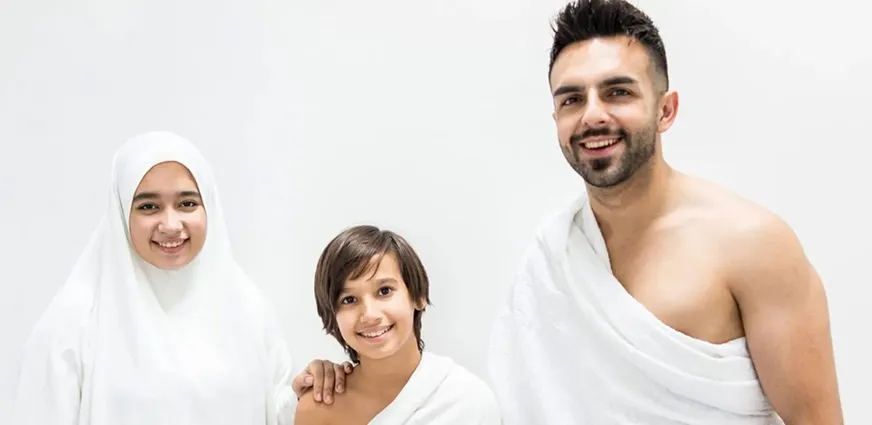
Ihram marks the start of the rituals for performing Umrah. Men don't wear "two sheets of white cotton fabric," and women wear "modest clothes." First of all, when starting the umrah ritual, it is important to understand that Ihram refers to both the clothing and the religious state, each with its own set of obligations.
Duʿā for Entering Ihram (Niyyah)
Arabic:
لَبَّيْكَ اللَّهُمَّ عُمْرَةً
English Translation:
"O Allah, here I am to perform Umrah."
Meaning:
This intention declares that Umrah is being performed solely for Allah.
This intention marks the formal beginning of Umrah and distinguishes worship from ordinary actions. By making Niyyah, the pilgrim dedicates every step of the journey solely to Allah. It reminds the heart to remain focused on obedience and humility. A sincere intention is essential for acceptance of Umrah.
Prohibited Acts While in Ihram
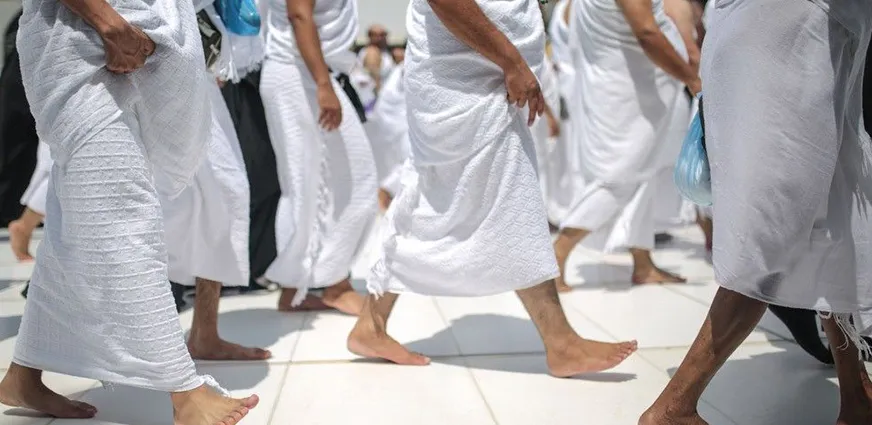
After the individual enters the state of Ihram, several things become haram. These include the following: the cutting of hair and nails, the hunting of all types of game, as well as the act of sexual intercourse. Speaking specifically regarding the teaching concerning females and the completion of the Umrah for females, it must not be forgotten that leaning toward your face,e as well as the use of gloves, es is considered haram.
Duʿā for Staying Firm in Ihram
Arabic:
اللَّهُمَّ أَعِنِّي عَلَى طَاعَتِكَ
English Translation:
“O Allah, help me to obey You.”
Meaning:
A prayer for strength to follow all the Ihram rules correctly.
This duʿā helps the pilgrim remain mindful of the rules and limitations of Ihram. It encourages patience, self-control, and discipline throughout the sacred state. By seeking Allah's help, the pilgrim acknowledges human weakness. This strengthens resolve to complete Umrah correctly.
Step-by-Step Umrah Rituals (Symmetrical for Men & Women)
Entering Masjid al-Haram
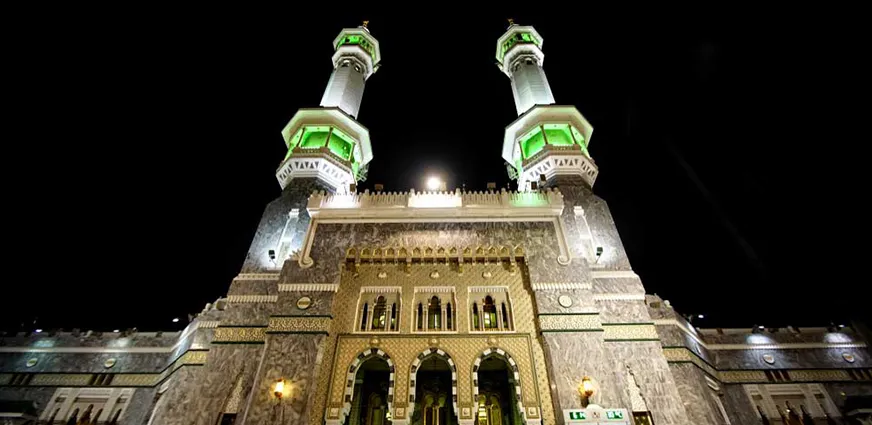
Entering Masjid al-Haram: This is another highly emotionally charged spiritual experience, offering immense pleasure in the form of Umrah, which involves entering the mosque known as Masjid al-Haram. When entering this pious mosque, it is advised to step inside first with your right leg and recite the necessary phrases to Allah to open the doors of Allah's mercy for you.
Duʿā Upon Entering the Mosque
Arabic:
اللَّهُمَّ افْتَحْ لِي أَبْوَابَ رَحْمَتِكَ
English Translation:
“O Allah, open for me the doors of Your mercy.”
Meaning:
A request for Allah's mercy and acceptance of worship.
Reciting this duʿā reminds the pilgrim of the sanctity of Masjid al-Haram. It encourages entering the mosque with humility and reverence. Asking for Allah's mercy prepares the heart for sincere worship. This moment often fills pilgrims with awe and gratitude.
Tawaf Around the Kaaba
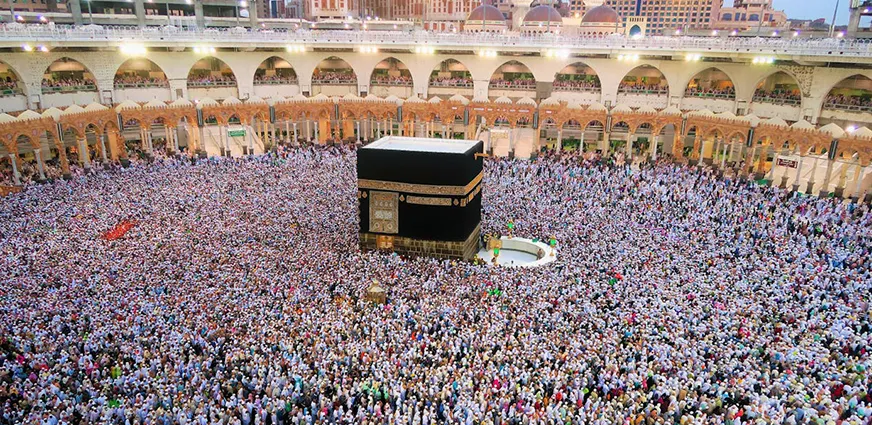
Tawaf is another essential aspect linked to Umrah performance. The ritual involves seven anti-clockwise rounds around the Ka'ba. The point to start the Tawaf routine begins at the top of Hijr Ismā'il al-Ḥarām. In the case of a person finding themselves in a crowded Tawaf, they do so from Hatim. The above clearly depicts the sense of togetherness among Muslims as they worship Allah. The aspect of Muslims performing Tawaf allows them to recite any genuine duaa, Quranic verses, dhikr, or a duaa.
Common Duʿā During Tawaf
Arabic:
رَبَّنَا آتِنَا فِي الدُّنْيَا حَسَنَةً وَفِي الآخِرَةِ حَسَنَةً وَقِنَا عَذَابَ النَّارِ
English Translation:
"Our Lord, grant us good in this world and good in the Hereafter, and protect us from the punishment of the Fire."
Meaning:
A comprehensive duʿā asking for success in both worlds.
This comprehensive duʿā balances worldly needs with the hope for success in the Hereafter. Tawaf is a moment of closeness to Allah, and this supplication reflects complete dependence on Him. It allows pilgrims to seek forgiveness, guidance, and protection. Many scholars recommend frequent recitation during Tawaf.
How Men Should Perform Tawaf
The men have to find the correct shoulder during the carrying out of Tawaf, pronounced 'Idtiba', whereby the higher part of the fabric of Ihram is placed below the right shoulder and upon the left. During the first three rounds of Tawaf al-Ifaadhaah, males are encouraged to move quickly in Raml steps whenever space is available, without inconveniencing others. During the remaining four rounds of Tawaf, males must perform it in the normal steps.
Duʿā for Humility
Arabic:
اللَّهُمَّ زِدْنِي خُشُوعًا
English Translation:
"O Allah, increase me in humility."
This supplication nurtures khushuʿ during Tawaf and throughout Umrah. It helps the pilgrim avoid pride and distractions while worshipping. True humility increases sincerity and focus in prayer. A humble heart is more receptive to Allah's mercy.
How Women Should Perform Tawaf
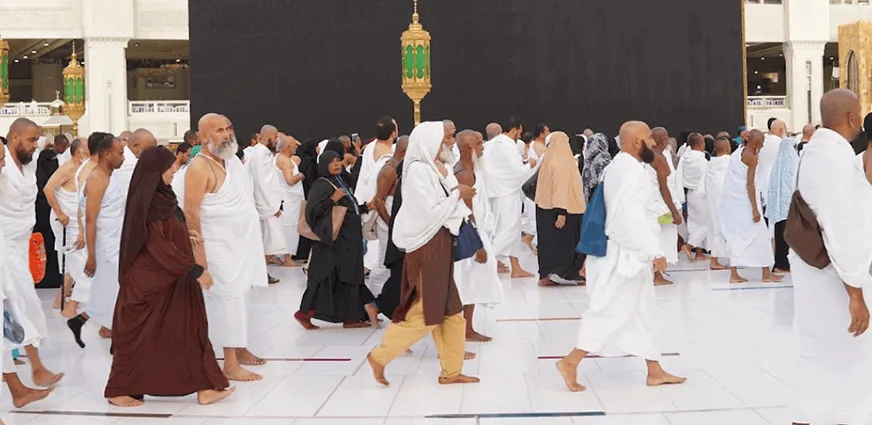
Tawaf of women is almost the same as the Tawaf of males in the number of Tawaf performed in the act of encircling the Kaaba without engaging in actions related to Idtiba' and Raml. The Ihram cloth used for the Tawaf of women should be the proper size, as required by the Islam guide. The speed during the Tawaf of seven rounds should be at a normal pace to be cautious, especially in the congregation area.
Duʿā for Modesty and Ease
Arabic:
اللَّهُمَّ يَسِّرْ لِي أَمْرِي
English Translation:
"O Allah, make my affairs easy."
This duʿā reflects a believer's trust in Allah during crowded and demanding rituals. It is especially meaningful in maintaining calm and dignity. Asking for ease helps pilgrims perform Tawaf safely and attentively. It encourages reliance on Allah in every situation.
Sa'i Between Safa and Marwah
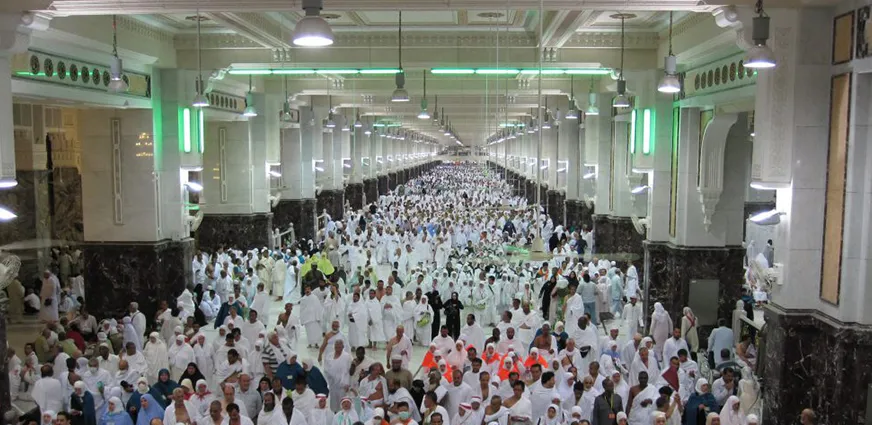
Sa'i is one of the essential rituals of Umrah and commemorates the devotion and patience of Hajar (AS) as she searched for water for her son, Ismail (AS). Pilgrims walk briskly between the hills of Safa and Marwah seven times, remembering her trust in Allah during a moment of great hardship. This ritual reflects perseverance, reliance on Allah, and complete submission to His will, making Sa'i a powerful act of worship.
Duʿā at Safa and Marwah
Arabic:
إِنَّ الصَّفَا وَالْمَرْوَةَ مِن شَعَائِرِ اللَّهِ
English Translation:
"Indeed, Safa and Marwah are among the symbols of Allah."
Meaning:
Affirms obedience to Allah's command.
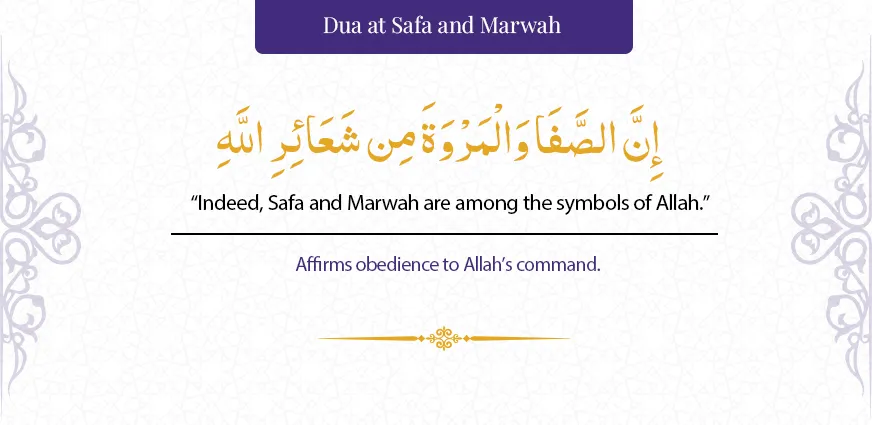
This verse reminds pilgrims that Sa'i is not merely a physical act, but a divine symbol established by Allah. Performing Sa'i with sincerity strengthens faith and deepens one's spiritual connection during Umrah.
Sa'i Instructions for Men
First, in Sa'I, they first turn back to Ka'bah after Safa, glorifying Allah, then perform a dua, followed by movement. They walk at an average pace between Safa and Marwah. Still, as soon as they see the two flags, they accelerate, jogging, as in their youthful, righteous, and energetic phase of life. Sa'I demonstrates power and energy to serve Allah. They shall remain righteous, without causing others to hasten, as Sa'I has to take place in secret.
Duʿā for Strength
Arabic:
اللَّهُمَّ قَوِّنِي عَلَى طَاعَتِكَ
English Translation:
"O Allah, grant me strength to obey You."
This supplication encourages physical and spiritual energy during Sa'i. It reminds pilgrims that all strength comes from Allah alone. Seeking help in obedience reinforces perseverance. This duʿā aligns effort with sincere worship.
Sa'i Instructions for Women
Thus, the processes and activities also take place in the Sa'i, with female involvement, though with minor variations. While acquiring knowledge regarding the Sa'i ceremony through the female process for Umrah, it is noted that the female does not jog between the flags. The female also does not perform the Sa'i ceremony for free. However, both modesty and convenience are the most prominent factors for women, and they can conduct the Sa'i ceremony at their convenience.
Duʿā for Patience
Arabic:
اللَّهُمَّ اجْعَلْنِي مِنَ الصَّابِرِينَ
English Translation:
"O Allah, make me among the patient."
This duʿā is especially meaningful during physically demanding rituals. It helps cultivate calmness and self-restraint. Patience is a key quality that Allah greatly rewards. Through this supplication, pilgrims seek inner peace and endurance.
Shaving or Trimming Hair (Halq / Taqsir)
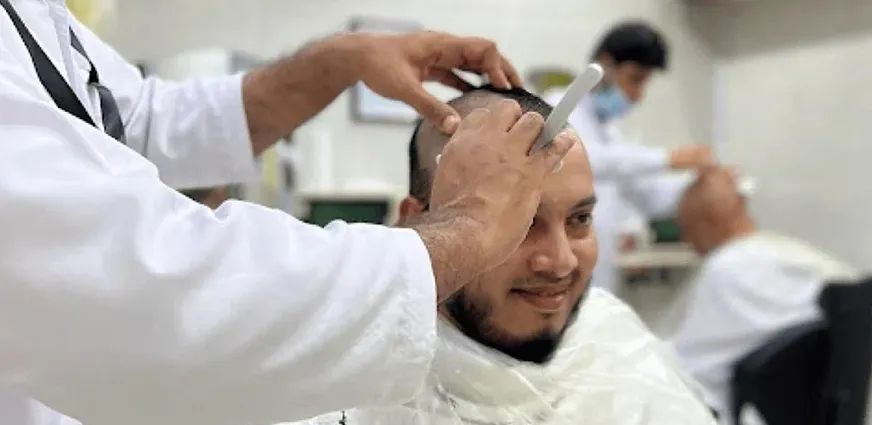
After performing the Sa'i between the two pillars of Safa and Marwah, the final part of the Umrah performance is Halq or Taqsir. Halq entails shaving the whole head, and it is preferable to Taqsir, since the reward earned by the person performing it is much greater. On the other hand, Taqsir entails the cutting of hair. It's also voluntary, unlike Halq. Halq is, however,r obligatory for females, and they will cut some hair equivalent to the top of the finger.
Duʿā After Hair Cutting
Arabic:
اللَّهُمَّ تَقَبَّلْ مِنِّي
English Translation:
"O Allah, accept this from me."
This duʿā marks the completion of Umrah and expresses hope for acceptance. It reflects gratitude for completing the rites. By asking Allah to accept the act, the pilgrim acknowledges that success comes only from Him. It is a moment of spiritual relief and joy.
Completion of Umrah & Recommended Du'as
Completing Halq or Taqsir means that the Umrah has been accomplished. The award-winning section is where one can express gratitude to Allaah for being selected to perform the Umrah. Gratitude has to be shown to Allah concerning certain matters. These include the act of worship, the weakness shown, the patience shown in Islam, and success in heaven and on earth. A person can commit different basic acts of worship. A couple of examples include performing an act of worship to show gratitude for the mercy shown in their worship, and expressing gratitude to Allah for weakness.
Duʿā of Gratitude
Arabic:
الْحَمْدُ لِلَّهِ الَّذِي أَتَمَّ عَلَيَّ نِعْمَتَهُ
English Translation:
"All praise is for Allah who completed His favour upon me."
This supplication expresses thankfulness for Allah's guidance and blessings. Completing Umrah is a great favour from Allah. Gratitude strengthens faith and humility. It encourages pilgrims to live righteously after returning home.
Special Cases
Performing Umrah on Behalf of the Deceased (Badal Umrah)
Islam also states that Muslims can perform "Umrah" for the dead if they fail to perform it because of their inability to do so. It is also referred to as "Badal Umrah". The person undertaking 'Badal Umrah' must ensure they complete 'Umrah' as well. In the case of the 'Niyyah' part of the ritual, when the person realises that they know the name of the individual for whom the 'Badal Umrah' is being performed, the Niyyah to perform 'Umrah' in the name of the deceased is also incorporated.
Duʿā:
اللَّهُمَّ هَذِهِ عُمْرَةٌ عَنْ (الاسم)
Meaning:
Declaring Umrah on behalf of the deceased.
This intention clarifies that the Umrah is performed on behalf of another person. It reflects mercy, responsibility, and sincerity. Making this duʿā ensures correct intention. It also highlights Islam's allowance for serving others through worship.
Second or Multiple Umrah
Furthermore, pilgrims might intend to perform a secondary or multiple Umrah during this journey, not only for themselves but also for their families. In light of this, they have to leave the Holy Haram and obtain residency within the state of Ihram from an allocated Miqat point, such as Masjid Al-Aisha, known as Tan'eem. In the subsequent section, with a brand-new personal intention and attaining the status of Ihram, an individual can repeat the process for conducting practices associated with Umrah as well.
Duʿā for Renewal of Intention
اللَّهُمَّ إِنِّي نَوَيْتُ عُمْرَةً
This duʿā renews focus and sincerity for an additional Umrah. It reminds pilgrims that intention must be clear for every act of worship. Renewing Niyyah prevents routine worship. It keeps the heart mindful of Allah's purpose.
Umrah With Children
Performing the Umrah with children is allowed. Similarly, this act of worship may be immensely beneficial. However, the Niyyah in this context shall be made only by the parents or guardians of those who are under the age of accountability. The Sa'i for children could be performed in two ways: either with the children's help or by carrying them on one's shoulders.
Duʿā for Children
اللَّهُمَّ احْفَظْ أَوْلَادَنَا
"O Allah, protect our children."
This duʿā reflects parental responsibility and care. It asks Allah to safeguard children physically and spiritually. Performing Umrah with children is a form of training in faith. The supplication reinforces trust in Allah's protection.
Umrah During Periods (Women)
Women experiencing menses and/or p/p bleeding can also attain the state of Ihram for Niyyah. Still, they cannot perform the ritual of Tawaf until they are clean. They can only perform all other acts of waiting. It is only when they are made clean that they can perform the rituals of Tawaf, Sa'i, and finally Umrah. There are a couple of exceptions in this matter. Still, in any case, Muslimahs should not feel ashamed of this practice, because there is actually an award for waiting in this condition.
Duʿā for Acceptance
اللَّهُمَّ أَجْرِنِي عَلَى صَبْرِي
"O Allah, reward me for my patience."
This duʿā offers comfort and reassurance during waiting. It reminds women that patience itself is rewarded. Seeking reward for patience strengthens faith. Allah values intention even when action is delayed.
Time and Cost Considerations
In scientific studies, it may take approximately 3 to 6 hours, depending on the number of participants who show up. However, these are held during the day when most individuals can participate. Upon taking into consideration journeys that are also joined in an attempt to participate in any of the activities that are linked to the show and the ritualistic practices that take place within the kingdom of Saudi Arabia, the visitor has only 7 to 14 days within this kingdom, since this is attributed to praying and relaxation as well.
Common Mistakes to Avoid
Skipping steps: If the rituals are not carried out or if they are performed wrongly, for example, if the ritual of Sa'i is not carried out and/or before cutting one's hair following the completion of this ritual, this will affect the validity of the Umrah.
Rushing Tawaf/Sai's: Rushed performances can lead to an elimination of the concentration and reflection needed in such performances.
Disrespect of Ihram rules: Using perfumes, cutting hair and nails, wearing a head covering (for males only), and involvement in illegal acts are all levels of disrespect towards the rules observed by individuals while in Ihram.
Additional Tips and Etiquettes
- Commonly Recommended Prayers & Du'as: You are required to make several du'as throughout your execution of Tawaf and Sa'i, demanding forgiveness, guidance, and acceptance by Allah. You are also required to make your personal du'as yourself, apart from a large number of du'as already emphasised in the Quran as well as the Hadith.
- Spiritual importance throughout the execution of rituals: You are required to perform your rituals quietly and modestly, refraining from self-appreciation and excessive talking, as well as cell phone conversations. A large amount of importance & focus should be given throughout your execution of rituals regarding the teachings associated with the Remembrance of Allah, along with the importance of Umrah service.
- When to Perform the Umrah (Off-peak/peak): With the presumption of a less crowded environment throughout your execution of off-peak Umrah, a preferably non-Ramadan period or a non-holiday time will be considered ideal. The significance of a large number of spiritual details throughout your execution of peak Umrah may yield. Still, it will be followed by increased spending and a large number of attendees.