





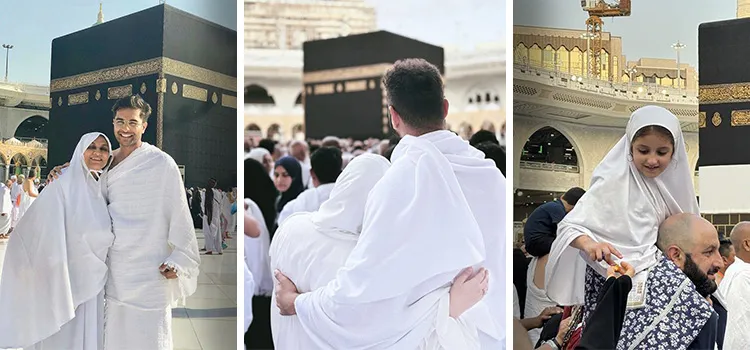
Understanding the concept of Mahram in Islam is essential for both men and women, as it influences many aspects of daily Muslim life. The idea of Mahram in Islam shapes family boundaries, marriage restrictions, hijab rules, travel rules, and social interaction. Numerous individuals inquire what a mahram is, what a mahram is not, and who is a mahram in Islam; the subject is frequently misconstrued.
What Does Mahram Mean? (Linguistic and Islamic Meaning)
The word "mahram" comes from Arabic and means "forbidden" or "protected." In simple terms, the Mahram meaning in Islam is a person with whom marriage is permanently forbidden under Islamic law. When people ask what a mahram in Islam is, or what the word " mahram " means, the answer is always connected to this permanent marriage rule. A mahram in Islam is not someone you cannot marry right now, but someone you can never marry at any time. This definition explains who is a mahram in Islam, and it also affects daily rulings such as hijab, travel, and interaction. Anyone who does not meet this condition is not a mahram and is treated differently under Islamic mahram guidelines.
From this definition flow several rulings:
- Hijab is not required in front of a Mahram
- Physical interaction is permitted within Islamic manners
- Seclusion is allowed
- Travel together is permitted
Anyone who does not meet this definition is a Non-Mahram.
The Foundation of Mahram in the Quran
The Mahram acceptance in Islam is clearly explained in the Quran, especially in Surah An-Nisa (4:23), where Allah lists the relatives with whom alliance is forbidden. This ballad forms the foundation of the Mahram in Islam arrangement and shows that a mahram accord is permanent. The Quran explains that an actuality becomes a mahram through claret relations, alliance ties, or breastfeeding. If none of these exist, again, the actuality is not a mahram, even if association or ability treats them as abutting family.
The Quran establishes Mahram through three abiding causes:
- Blood relationship
- Marriage relationship
- Breastfeeding relationship
If none of these exist, the actuality is a Non-Mahram, even if culturally brash.
Mahram vs. Non-Mahram: Understanding the Core Difference
To clarify, Mahram and non-Mahram: the key point is the marriage qualification in Islam. A mahram is an individual whose marriage is forever illegal. In contrast, a non-mahram is somebody whose marriage is permitted under Islamic law. When individuals inquire what a non-mahram is, or what is non-mahram in Islam, the reply is continuously connected to this plausibility of marriage; indeed, if marriage is not expected or likely.
The term non-mahram refers to anyone who does not become a Mahram through blood relations, marriage, or breastfeeding. This implies that cousins, in-laws such as a brother-in-law or sister-in-law, and any unrelated man or woman are considered Non-Mahram. Since marriage is conceivable with a Non-Mahram, Islam sets clear rules for interaction, including hijab, limits on physical contact, and limitations on disconnection. Understanding what does not constitute non-Mahram cruelty makes a difference; Muslims apply adjusted boundaries in day-to-day life and maintain appropriate Islamic conduct.
Who is a Mahram for a Woman?
For women, a mahram in Islam is a male with whom an alliance is assuredly forbidden. This includes abutting ancestors associates such as a father, son, brother, nephew, and both benevolent and affectionate uncles. A man can additionally become a mahram through marriage, like a bedmate or father-in-law, or through breastfeeding under Islamic rules. Alive, who is a mahram in Islam for women, helps analyse issues related to hijab, travel, and circadian rhythm while advancing Islamic boundaries.
Mahram by Blood Relation
A Mahram by claret includes macho ancestors who are not accompanying through the ancestors' lineage. This accumulation contains her ancestors and her grandfather; her son and grandson; her brother; her nephew from either a brother or a sister; and both her benevolent and affectionate uncles. Because alliance with these ancestors is assuredly forbidden, they are a constant mahram in Islam.
These include:
- Ancestor and grandfather
- Son and grandson
- Brother
- Nephew (brother's son or sister's son)
- Benevolent uncle
- Affectionate uncle
Mahram by Marriage
A Mahram by alliance is created through an accurate nikah. Already, alliances take place, and assertive relationships become assuredly banned for marriage, such as a husband, a father-in-law, and a son-in-law. These individuals abide by the e-mahram, even if affairs change later, which shows the abiding nature of the Mahram in Islam.
These relationships become Mahram through nikah:
- Husband
- Father-in-law
- Son-in-law
Mahram by Breastfeeding (Rada'ah)
Islam gives breastfeeding relationships the aforementioned acknowledged cachet as claret relations back specific altitude are met. A milk father, milk brother, and milk son all become abiding Mahram through breastfeeding. Already, this band is established; the alliance is banished aloof, like with biological relatives, making them constant Mahram.
Islam gives breastfeeding the aforementioned acknowledged weight as a claret relation:
- Milk father
- Milk brother
- Milk son
Once breastfeeding aobligationsare fulfilled, these individuals become an abiding Mahram.
Who is a Mahram for a Man?
For men, a mahram in Islam is a relative with whom an alliance is assuredly forbidden. This includes abutting ancestors associates such as a mother, grandmother, daughter, granddaughter, sister, and niece. Women can additionally become Mahram through marriage, like a mother-in-law or daughter-in-law, or through breastfeeding under Islamic law. Alive, who is a mahram in Islam for me, helps with advice, able interaction, hijab rules, and ancestral boundaries in daily life.
Mahram by Blood Relation
A Mahram by claret for men includes changeable ancestors who are not accompanying through ancestry. This accumulation consists of his mother and grandmother, his baby and granddaughter, his sister, his nieces, and both benevolent and affectionate aunts. Alliance with these women is assuredly forbidden, considering them constant Mahram in Islam.
- Mother and grandmother
- Girl and granddaughter
- Sister
- Niece
- Fatherly aunt
- Maternal aunt
Mahram by Marriage
A Mahram by alliance is accustomed through a valid nikah. For men, this includes a mother-in-law and a daughter-in-law. These women become abiding Mahram after marriage; acceptance of alliance is never permissible with them, and they are brash with the rights and protections of a mahram relationship.
- Mother-in-law
- Daughter-in-law
Mahram by Breastfeeding
Islam additionally recognises breastfeeding (Rada'ah) as creating abiding mahram relationships. For men, a milk mother, milk sister, and milk babe are all brash Mahram; already, the Islamic altitude for breastfeeding is fulfilled. This clearly shows that the concept of Mahram in Islam is equally essential for men and is not a rule limited to women.
- Milk mother
- Milk sister
- Milk daughter
This acutely proves that Mahram is not a women-only concept.
Who is Considered a Non-Mahram?
A Non-Mahram is anyone with whom an alliance is Islamically allowed. Accepted examples accommodate cousins, brothers-in-law, sisters-in-law, an aunt's husband, or any other man or woman. Because an alliance is accessible with a Non-Mahram, Islam sets bright rules for interaction, such as celebratory hijab, limited physical contact, and preventing seclusion. Understanding who is a non-mahram helps Muslims advance morality, set boundaries, and balance amusing antitheses in daily life.
Common Non-Mahram examples:
- Cousins
- Brother-in-law
- Sister-in-law
- Aunt's husband
- Any different man or woman
Islam imposes strict guidelines on interactions with Non-Mahram to ensure chastity and a healthy balance.
Mahram Rules and Hijab
In Islam, hijab rules are not affiliated with the concept of Mahram. Hijab is appropriately abandoned in the presence of non-Mahram people. At the same time, it is not binding in the presence of a mahram in Islam. However, bashfulness is still essential, like with a mahram, as Islam does not acquiesce apparent behaviour or exposure, alike among abutting relatives. Understanding the acceptance of Islam helps Muslims appreciate that the hijab is an important aspect and advances Islamic values in daily life.
Mahram and the Rules of Seclusion
Khalwa agency, a man and a woman actually abandoned calm in a clandestine space. Islam carefully forbids khalwa with a Non-Mahram to anticipate allurement and advance moral boundaries. However, in actuality, a woman is allowed to be accompanied by a mahram in Islam, as alliance is assuredly forbidden, and there is no risk of inappropriate behaviour. This aphorism applies to men and women alike, helping protect both individuals against abuse while advancing Islamic ethics.
Mahram Rules for Travel
Travel is one of the most significant issues associated with the Mahram in Islam. Traditionally, women are reluctant to bike with a mahram to ensure their safety and protection, especially on long journeys. Travelling alone with a non-mahram is discouraged, as Islam emphasises security, morality, and clear boundaries during travel. Understanding who is a mahram in Islam helps plan journeys in accordance with Islamic guidance.
Can a Woman Travel Without a Mahram?
Authentic hadith acknowledge that a woman should not bike alone after a mahram. Still, advisers differ on specific details such as travel distance, mode of travel, and level of safety. Questions like can women bike after a mahram, travel after a mahram, or can a woman bike after a mahram, Hanafi about arising. Some also ask: Is travelling after a mahram haram? Or, how far can a woman bike without a mahram, IslamQ?. While there is some disagreement, travelling with a mahram charcoal is the safest and most well-defended option, especially for long journeys such as Umrah. Alike questions about abuse for travelling after a mahram, back a woman campaign after a mahram, and how a woman travels without a mahram are addressed by advisers with caution, emphasising safety and Islamic guidance.
Authentic hadiths state that a woman should not ride a bike after a Mahram. Advisers differed on:
- Biking distance
- Access to travel
- Akin to safety
Despite differing opinions, travelling with a Mahram charcoal is the safest and most secure option, especially for long journeys like Umrah.
Mahram Rules for Umrah
The catechism of assuming Umrah after a Mahram is broadly discussed among scholars. Classical authorities have stated that a woman must always have a mahram for Umrah. In contrast, some contemporary advisers allow women to travel in organised and protected groups. Despite this, accepting a Mahram charcoal is the safest and best adopted approach. Abounding bodies chase. Do you charge a mahram for Umrah? Can a woman accomplish Umrah without a mahram in Islam, or Umrah after a mahram hadith to accept the rules? Ishtehaar issues such as the Mahram age for Umrah and whether a woman over 45 can travel with a Mahram are also addressed by scholars. Still, government permissions do not change the Islamic analogue of Mahram. Questions such as can you do Umrah without a Mahram, Umrah for ladies after Mahram, and can I go for Umrah after Mahram are common, but afterwards, Islamic advice always emphasises the need for assurance and able adherence to Shariah.
The affair of Umrah after a Mahram is frequently discussed.
- Classical advisers about the appropriate Mahram
- In contemporary rulings, many scholars permit women to join organised and secure group Umrah packages when a Mahram is not present, as these provide the necessary structure and safety.
- Accepting a Mahram charcoal, the adopted and alert approach
Government permissions do not change the Islamic analogue of Mahram.
Does Age Remove the Need for a Mahram?
Islam does not set any specific age at which the rules of Mahram in Islam no longer apply. Like earlier women, adolescent women abide beneath the aforementioned advice. Rules that acquiesce to biking after a Mahram are based on government or civic policies, not Shariah. Advisers emphasise that accepting a Mahram is consistently the safest option. Age does not exempt a Mahram from liability under Islamic law.
The Wisdom Behind the Mahram System in Islam
The mahram arrangement is advised to ensure individuals and families, not to bind freedom. It safeguards honour and prevents corruption or harm. Mahram rules advise bottle ancestors anatomy and advance bright amusing boundaries. They provide advice on safe, respectful interactions between men and women. In Islam, these rules are an anatomy of benevolence and care, not a burden.
Islam did notauthorisee Mahram rules to bind freedom. The acumen includes:
- Protection of honor
- Preservation of family structure
- Prevention of exploitation
- Clear social boundaries
Mahram rules are a mercy, not a burden.
Conclusion: The Importance of Understanding Mahram
The Mahram acceptance in Islam defines abiding relationships and sets bright moral boundaries. It applies appropriately to men and women in all aspects of life. Mahram rules affect circadian rhythms, travel, and religious practices such as Umrah. Understanding who is Mahram in Islam ensures actual and assured convenance of the faith. Afterwards, these rules help advance both claimed assurance and amusing harmony.